
Many shorter-statured individuals feel visually overwhelmed by clothing that was designed for taller frames. The issue is rarely height itself; it is proportion, scale, and visual interruption. Personal styling offers a powerful, non-restrictive solution—using design principles that guide the eye vertically rather than horizontally.
Looking taller is not about hiding or “correcting” the body. It is about learning how garments interact with proportion, line, and balance. With intentional styling, silhouettes become cleaner, outfits feel lighter, and confidence increases naturally.
This guide breaks down the exact styling principles professional stylists use to create visual height—paired with real-world outfit formulas, tailoring strategies, and inclusive recommendations for petite women, petite-plus clients, and short men.
Styling Principles That Create the Illusion of Height
1. Proportion Control (The Most Important Rule)
Visual height depends on where the eye starts and stops.
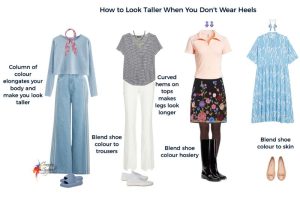
How it works:
Shorter rises, low waistlines, and long tops visually shorten the leg line. Raising the waist creates instant vertical extension.
Actionable example:
-
Choose high-rise trousers that sit at the natural waist
-
Crop tops at the hip bone—not mid-thigh
-
Tuck or half-tuck tops to re-establish the waistline
2. Vertical Lines & Eye Flow
The eye follows uninterrupted lines.
How it works:
Vertical seams, pleats, button plackets, and open layers guide the gaze up and down rather than side to side.
Actionable example:
-
Open blazer over a same-color base layer
-
Center-front seams on trousers
-
Long necklaces that end below the bust
3. Monochrome & Tonal Dressing
One color story = one long visual column.
How it works:
High contrast cuts the body into sections. Tonal dressing allows height to read continuously.
Actionable example:
-
Cream knit + cream trousers + beige shoes
-
Black tee + black trousers + black loafers
4. Strategic Tailoring
Fit matters more than size.
How it works:
Excess fabric adds visual weight. Clean lines lengthen.
Actionable example:
-
Sleeves hemmed to wrist bone
-
Trousers tailored to skim the shoe
-
Waist suppression without pulling
5. Footwear & Ground Contact
Where the outfit meets the floor matters.
How it works:
Pointed toes and low vamp cuts extend the leg line.
Actionable example:
-
Almond-toe flats
-
Low block heels (2–3 inches)
-
Shoe color matching trousers or tights
6. Hair, Accessories & Upper-Body Balance
Height is perceived from head to toe.
How it works:
Volume at the crown and clean necklines lengthen the upper frame.
Actionable example:
-
Mid-length hair with vertical movement
-
V-neck or scoop neck tops
-
Smaller-scale bags worn higher on the torso
Outfit Formulas That Make Shorter Frames Look Taller
1. Office Classic (Petite Women)
-
Occasion: Professional / Office
-
Items: Fitted blazer, monochrome blouse, high-rise ankle trousers, pointed-toe pumps
-
Color Palette: Navy or charcoal
-
Price: Budget / Mid / Splurge
-
Why it works: Vertical structure + raised waist
2. Smart Casual (Short Men)
-
Occasion: Business casual
-
Items: Slim knit polo, tailored chinos, loafers, lightweight jacket
-
Color Palette: Olive or charcoal
-
Price: Budget / Mid / Splurge
-
Why it works: Clean lines, no excess fabric
3. Casual Weekend (Petite Plus)
-
Occasion: Off-duty
-
Items: Cropped cardigan, high-rise straight jeans, platform sneakers
-
Color Palette: Soft neutrals
-
Why it works: Waist emphasis without cling
4. Date Night (Petite Hourglass)
-
Items: Wrap dress above knee, tonal heels
-
Color Palette: Burgundy or black
-
Why it works: Defined waist + uninterrupted color
5. Travel Day (Gender-Neutral)
-
Items: Matching knit set, streamlined trainers, crossbody bag
-
Color Palette: Charcoal or camel
-
Why it works: Comfort without bulk
6. Creative Workwear
-
Items: Vertical stripe blouse, tailored trousers, ankle boots
-
Color Palette: Black & ivory
-
Why it works: Pattern direction elongates
7. Evening Event
-
Items: Column dress, minimal heels, long earrings
-
Color Palette: Jewel tones
-
Why it works: Vertical continuity
8. Summer Casual
-
Items: High-waist shorts, tucked tank, slide sandals
-
Color Palette: Light monochrome
-
Why it works: Leg line emphasis
9. Cold Weather
-
Items: Longline coat worn open, knit base, boots matching trousers
-
Why it works: Vertical outer layer
Tailoring & Fit Tips (With Before/After Notes)
-
Hem Length:
Before: Pants pooling at ankle
After: Clean break at shoe top -
Rise Adjustment:
Before: Low-rise jeans shorten legs
After: Mid-to-high rise elongates -
Sleeve Length:
Before: Sleeves cover hands
After: Ends at wrist bone -
Waist Placement:
Before: Dropped waist
After: Natural waist definition -
Shoulder Fit:
Before: Drooping seams
After: Seam hits shoulder edge -
Waist Suppression:
Before: Boxy silhouette
After: Gentle shape without tightness
Optical Patterns & Color Strategy by Body Type
Petite Straight:
-
Vertical ribbing, cropped layers
Petite Hourglass:
-
Tonal waist emphasis
Petite Pear:
-
Dark bottoms, lighter tops
Short + Curvy:
-
Matte fabrics, vertical seams
Avoid large horizontal stripes and extreme color blocking at mid-body.
Footwear That Adds Height (Without Sacrificing Comfort)
-
Ideal heel height: 2–3 inches
-
Platforms distribute weight better than stilettos
-
Nude or shoe-to-pant color matching elongates
-
Ankle straps shorten leg line unless color-matched
-
Boot shafts should hit mid-calf or below ankle
Posture & Grooming Checklist
-
Neutral spine posture (consult movement professionals if needed)
-
Hair volume at crown
-
Necklines that open the chest
-
Avoid overly bulky scarves
Dos & Don’ts for Looking Taller
DO:
-
Dress tonally
-
Tailor everything
-
Raise the waist
DON’T:
-
Break the body with contrast
-
Wear oversized lengths
-
Let hems drag
FAQ: Personal Styling & Looking Taller
Q1: Can flats still make someone look taller?
Yes—pointed toes and low vamp cuts extend the leg line.
Q2: Are cropped pants bad for short people?
Only if they hit mid-calf. Ankle-length works best.
Q3: Do vertical stripes always help?
Yes, when scaled appropriately to body size.
Q4: Is monochrome boring?
Texture and fabric variation prevent flatness.
Q5: Can curvy petites use these tips?
Absolutely—structure and fit matter more than size.
Q6: Does tailoring really make that much difference?
Tailoring is often the most impactful styling tool.
Conclusion: Height Is a Styling Skill, Not a Measurement
Looking taller is not about changing the body or following restrictive fashion rules. It is about understanding how proportion, fit, and visual flow work together—and using those tools intentionally. When personal styling is done well, clothing supports the body rather than competing with it.
Shorter-statured individuals benefit most from clarity, not more clothes. Clean lines, thoughtful tailoring, tonal dressing, and strategic footwear consistently create length, balance, and confidence across body types, sizes, and genders. These principles work whether the goal is professional polish, everyday ease, or elevated evening style.
With the right styling framework, getting dressed becomes simpler and more consistent. Outfits feel purposeful. Wardrobes work harder. And personal style becomes an asset rather than a source of frustration.
For those ready to move beyond generic advice, personalized styling offers the fastest and most effective results—because no two bodies, lifestyles, or style goals are the same.